
Storm Drain Cleaning Services: What Property Owners Across Miami-Dade Should Know
A retail plaza off NW 41st Street in Doral floods for a different reason than a bungalow on a quiet Hialeah side street, but the two problems usually end the same way: water sitting where it should have drained an hour ago. In Doral, it's often a parking lot's worth of runoff feeding into a single line built for a smaller footprint. In Hialeah, it's frequently an older residential drain that's been narrowing with sediment for years without anyone noticing until a hard rain finds the weak point.
Our team runs storm drain cleaning services across both kinds of properties, from Miami and Miami Gardens down through Kendall, Cutler Bay, and Homestead, and the underlying issue is almost always the same: a line that used to move water fast enough and no longer does.
Storm drains narrow gradually as sediment, roots, and debris build up along the pipe, until a normal rain event overwhelms what's left of the opening. The fix is mechanical jetting that clears the full line, not just the grate, and a camera inspection first tells you whether you're dealing with routine buildup or something structural. Residential lines typically need a look every year or two; commercial properties with more paved surface, like the plazas and office parks along Doral's commercial corridors, often need it more often.
1. How storm drains clog differently depending on the property
A single-family lot in Kendall or Cutler Bay usually has a short, simple drain run, and what clogs it is what you'd expect: yard debris, sand, and sediment that settles a little more with every rain until the line is most of the way blocked. Coral Gables adds its own variable on top of that. The neighborhood's mature tree canopy, part of what makes those streets look the way they do, means root intrusion at pipe joints is a more common cause of a slow drain there than it is in a newer subdivision.
Commercial properties clog for a different reason entirely. A plaza or office park in Doral has far more paved surface feeding into the same size line a house would use, so the volume of runoff during a downpour is simply higher, and it's carrying parking lot debris, not yard waste. Homestead sits at the edge of both worlds: a mix of newer residential construction and land closer to open agricultural areas, which can mean more loose sediment washing into a drain than you'd see on an established city block.
2. What jetting actually clears (and why clearing the grate isn't the same thing)
Our team uses high-pressure jetting to cut through the debris, silt, and sediment sitting inside the line itself, pushing it out to a collection point rather than just clearing what's visible at the surface opening. That distinction is the difference between a fix and a temporary patch. Clearing only the first few feet of a drain often just relocates the clog a little further down the pipe, and the same backup shows up again on the next rain.
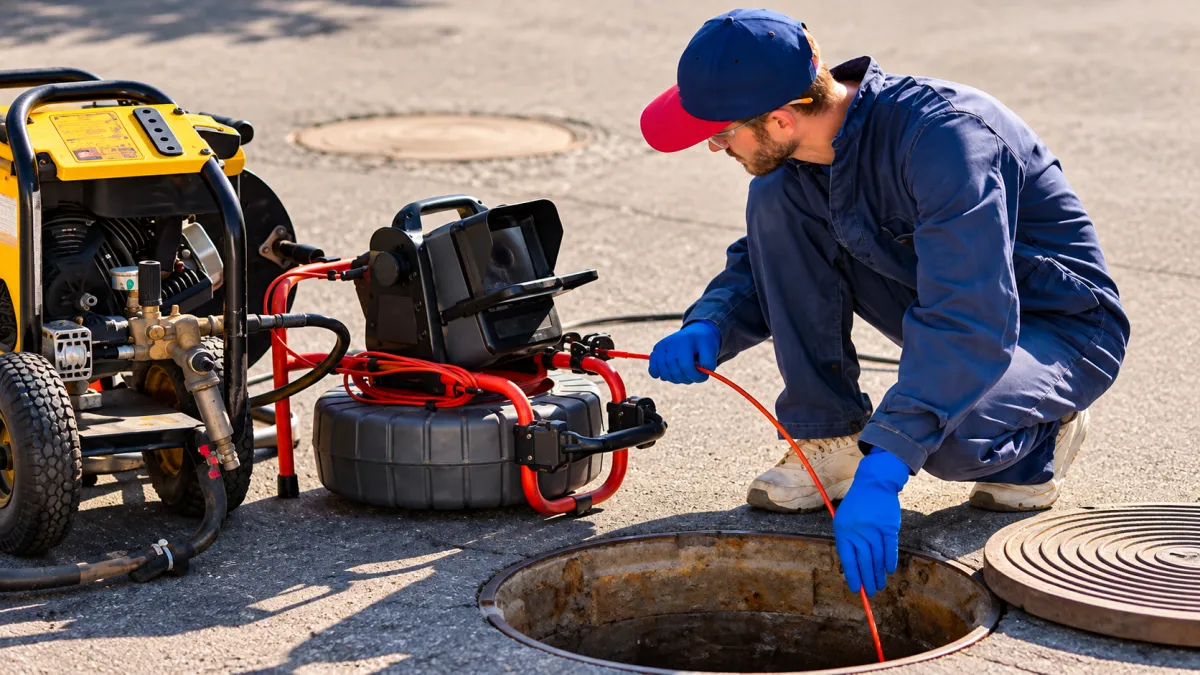
For a line with a harder blockage, a chronic backup spot, or an unclear cause, camera inspection confirms exactly where the problem sits, whether it's sediment, a root intrusion (more likely under an older tree-lined street), or a structural issue with the pipe, before any repair plan gets decided.
3. Residential drains versus commercial and multi-unit properties
The practical difference between a house and a commercial property isn't just size, it's what's feeding the line. A home in Miami Gardens or Homestead is usually dealing with a straightforward jetting pass. A strip plaza or multi-unit building, more common along Doral's commercial stretches or the busier corridors through Hialeah, is often tied into a longer, shared run with a heavier debris load, and grease or sediment carryover from an adjacent commercial kitchen can compound the problem. That's part of why we treat grease trap cleaning as its own dedicated service rather than folding it into general drain work.
4. How often storm drains need cleaning
There's no single number that fits a home in Cutler Bay and an office park in Doral equally, but the pattern holds fairly consistently: residential systems tend to need attention every one to two years, while commercial and multi-unit properties with heavier runoff often do better on an annual schedule, sometimes tighter if the property has a known low spot. A property with mature trees nearby, the way many Coral Gables lots do, or one that sits low relative to the street, usually needs to be checked more often than that baseline suggests.
5. Signs it may be time to get a drain looked at
Water pooling near a storm drain grate during or right after rain, rather than draining within a few minutes
A noticeable smell near the drain opening, which often points to trapped organic debris breaking down inside the line
Visible sediment or debris built up at the grate itself
A driveway, parking area, or low point on the property that floods faster than it used to, especially on a plaza or lot with a lot of paved surface
Slow drainage that used to clear quickly after a storm and now takes hours
Any one of these on its own might not mean much, but two or more together usually means the line is narrowing and it's worth getting eyes on it before the next hard rain finds the weak point.
6. What actually drives the size of the job
Factor | Keeps it a lighter job | Pushes it toward a bigger job |
Debris type | Loose sediment and yard debris that jetting clears in one pass | Compacted sediment, root intrusion, or a structural pipe issue |
Line length & access | A short, accessible residential run | Long commercial runs, or drains buried under a plaza's paving |
History | First cleaning, or on a normal maintenance schedule | Years without service, or a known chronic backup spot |
Property type | Single-family home with a simple drain layout | Commercial property, multi-unit building, or shared drainage system |
Setting | A newer subdivision with younger trees | An older tree-lined street where roots reach pipe joints |
We don't publish flat pricing for storm drain work because these factors genuinely change what a job requires. A camera inspection before any work starts is what tells us, and you, which side of this table a given property actually falls on.
7. Why “we jetted it and it backed up again in a month” happens
The most common frustration property owners describe isn't that a cleaning didn't work, it's that a drain was cleared and backed up again within weeks, and the natural assumption is that the job was done poorly. Often the real cause is that only the surface or the first few feet of the line got cleared, not the full run, so sediment further down the pipe simply moved forward and resettled. A thorough jetting pass, paired with a camera inspection to confirm the line is actually clear end to end, is what prevents that repeat call. If a drain has backed up again shortly after a cleaning from any provider, that's usually a sign the job addressed the grate, not the blockage further down the line.
8. What to ask before you book anyone for storm drain work
Does the cleaning use jetting, or just manual clearing at the surface?
Will they run a camera to confirm the full line is clear, not just the section near the access point?
Do they scope a residential drain differently from a commercial or multi-unit system?
What happens if they find a structural issue mid-job, not just a debris clog?
Do they actually work in your part of Miami-Dade, whether that's a Hialeah side street or a Doral office park, or are you outside their normal coverage?
A provider who can answer all five without hesitation is telling you they've scoped storm drain work before, not just added it to a service list.
Frequently asked questions
How much does it cost to have someone clean your drains?
It depends on the line length, how compacted the debris is, and whether a camera inspection turns up anything beyond routine sediment. Our team can walk through what your property's setup looks like, whether it's a single-family lot or a commercial plaza, and what that means for the scope of the job before any work starts.
How often do storm drains need to be cleaned?
Most residential systems do well on a one to two year cycle. Commercial and multi-unit properties with more paved surface and runoff, common along Doral's commercial corridors, usually benefit from an annual check.
What is the best way to clear a blocked stormwater drain?
High-pressure jetting is the standard approach for a line that's narrowed from sediment, debris, or root intrusion, because it scours the full pipe rather than just clearing the opening. A camera inspection first helps confirm what's actually causing the blockage before committing to a method.
What dissolves sludge in drains?
Chemical treatments exist, but for a storm drain carrying sediment, silt, and yard debris rather than household grease, mechanical jetting is what actually removes the material instead of just breaking it down in place, where it can compact and cause problems later.
Get your storm drains checked before the next hard rain
Whether it's a house on a quiet street in Kendall or Cutler Bay, an older lot in Coral Gables, or a commercial property along one of Doral's busier corridors, our team can get out to your property and clear the line properly, jetting the full run rather than just the surface. Get a free quote or call (786) 282-8690, and if the same drain has needed attention more than once, ask about a full inspection alongside the cleaning so you know exactly what's going on in the line. We also handle grease trap cleaning for commercial kitchens on the same property, and cover Miami-Dade County alongside our other service areas. Browse our full range of services to see how storm drain work fits with the rest of what we do on your property.